

#23 Up the Flagpole
Plus: Testing tax tweaks, increasing inflation, and a new magazine for liberalism
Welcome to the 23rd instalment of the Liberal Digest. It’s a tradition as old as time for policy proposals to conveniently leak out prior to a Budget in a bid to gauge their popularity. This week we were treated to a handful – including on Stamp Duty and Capital Gains Tax. Whether done deliberately in a bid to kill them dead or if they really are a sign of things to come remains to be seen. What’s clearer than ever is that Rachel Reeves is in a bind – boxed in by self-imposed promises not to increase any of the big revenue raisers and incapable of meaningfully trimming spending. Necessity could be the mother of radically, and rationally, reforming the tax system – but don’t be surprised if what we get is simply more fiscal bodges that pile on complexity and drag down economic growth.
In this week’s edition: pension plans, development data, evidence on automation, and crunching the data on non-doms.
Did we miss something? Let us know.
Stop the Press!
Best op eds, interviews, news and analysis of the week in the old-school media
Paul Johnson sets out a plan for reforming pensions and breaking free of the triple lock:
“Even for the pretty well heeled, the state pension is a crucial part of retirement planning. It provides possibly the only guaranteed regular income that most will receive in retirement, it is a bulwark against the fear that savings will be means-tested away and it provides some protection against inflation. That’s why one of the key recommendations that my former colleagues at the Institute for Fiscal Studies and I have made is that the government should implement a four-point guarantee: that the state pension will never fall in real value, that it will never be means-tested, that we will always get at least ten years’ notice of any increase in pension age and that over time it will maintain its value relative to average earnings.”
Philip Stephens argues that the debate about immigration in Britain has become a hall of mirrors:
“There is no “right” number for authorised immigration. Experience suggests there is a wrong one. Between 2010 and 2020 the net figure (people arriving minus those leaving) fluctuated around an average of 250,000. After a steep fall during the Covid pandemic, that number soared. A parliamentary report estimates that immigration added some 2.2mn to the population in 2021-23 — almost as much as during the entire previous decade. A strategy to restore public trust has two essential ingredients. Tighter control over the number of people arriving and a comprehensive plan to cushion the impact on communities that attract large numbers of newcomers. The evidence suggests that immigration adds to national prosperity. But that is an aggregate calculation. Many of the places in which they settle are among the country’s poorest and already face strains on public services. New arrivals invite resentment.”
Tom Calver crunches the data on crimes committed by immigrants:
“To some people, one crime committed by a migrant is one too many. But when we think rationally about the data we do have, we cannot say that migrants as a whole are more likely to commit crime than everyone else. We await better data. Until then, bad data and bad interpretations threaten to fill the void.”
Maxwell Marlow makes the case for the total abolition of Stamp Duty on homes:
“Research from [the Adam Smith Institute] shows that stamp duty destroys 75p of wealth for every £1 raised and that it was eight times more destructive than VAT. Both the benchmark Australian Henry Tax Review and the IFS’s Mirrlees Review found that the tax is essentially meritless and provide little argument as to why it should remain in place. Stamp duty contributes to the dreadful labour mobility we experience, whilst also destroying the ambition of those grasping at the housing ladder as property values exceed salaries and inflation. It also ensures that wealth is captured in unproductive bricks, mortar, and glass, instead of in productive capital such as machinery and investments.”
Thomas Pasquier explains why Norway’s sovereign wealth fund should serve as a blueprint for Britain’s to follow:
“The Norwegian wealth fund’s year-on-year returns have supported long-term welfare commitments, a flat rate of income tax and a highly favourable budgetary position. Norway has emerged as one of few European nations to run successive budget surpluses, a rare benchmark: in 2023, it realised a surplus of 16.3% of GDP. At the time of its establishment, Norway’s fund was novel and untried: a complete shot in the dark. Yet its success was not built on luck. Instead, multi-generational prosperity was guaranteed by the effective deployment of managerial capital, the pioneering conquest of diverse investment grade markets, and most importantly, self-imposed fiscal restraints, which ensure that the tap does not run dry.”
Ali Lyon tries to get to the bottom of just how many non-doms are fleeing the UK:
“Anecdotal evidence must – of course – be treated with a handful of salt, too. But if Mark Twain made it fashionable to hold a magnifying glass up to the tyranny of shoddily compiled statistics, it was another household name – less renowned for his contribution to the English language – who produced an illuminating line on what to do when stats and hearsay appear to diverge. “When the data and the anecdotes disagree,” Jeff Bezos said in 2023, “the anecdotes are usually right.””
Our own Callum Price argues that anticapitalism disguised as other causes is on the rise:
“Capitalism needs a radical, and explicit defense in political and public life, including from our politicians. That is not to say there are not obvious problems that need fixing, from home ownership to the welfare trap. But rather to say that the system that has been so successful so far does not need to be ripped up in order to solve problems in public health, the environment, or the Middle East. The evidence shows that free markets are the solution, not the problem.”
Jeremy Warner: Reeves must take her share of the blame for rising inflation
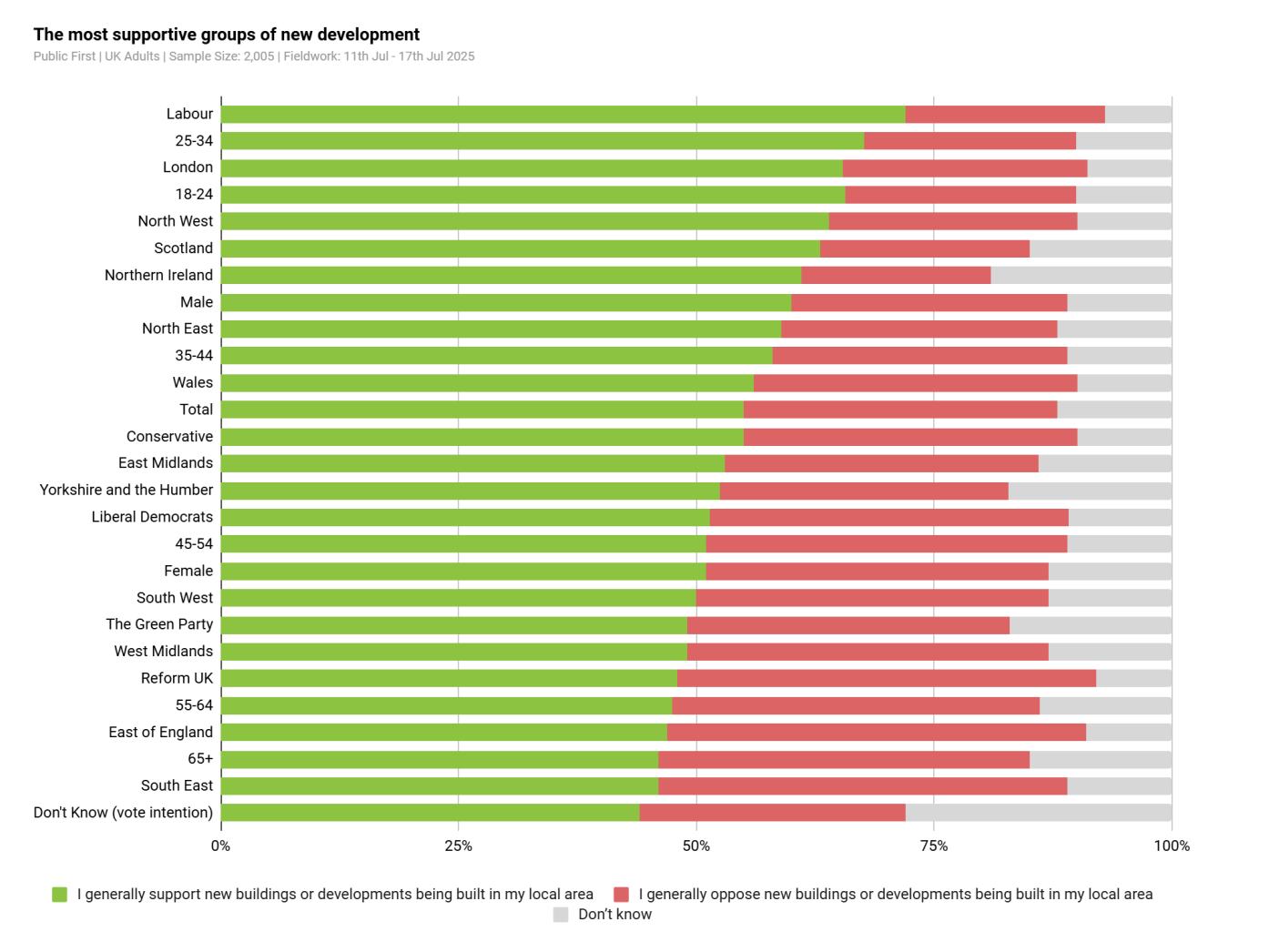
The Times: Rachel Reeves to cut ‘bats and newts’ in boost to developers
The Guardian: Labour preparing to use public-private funding model for NHS in England
The Economist: A court ruling threatens to disrupt Britain’s asylum policy
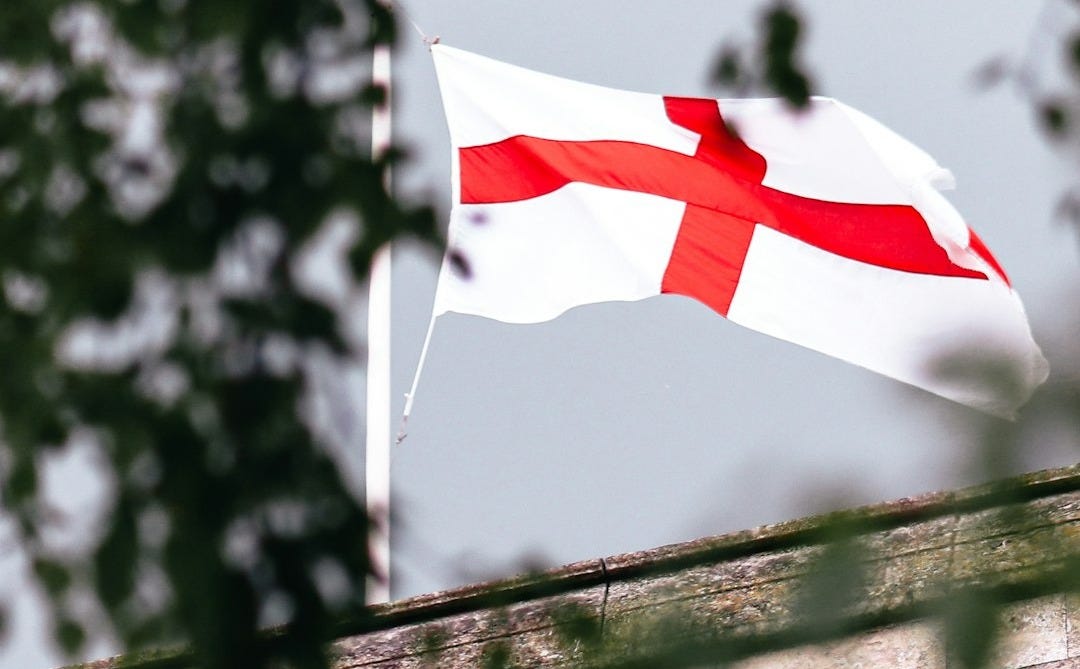
The Guardian: Row grows over motives behind England flag campaign
Stacks of Freedom
Highlights from our fellow Substackers
The Argument launched, with an opening essay about the true meaning of liberalism:

Benedict Springbett documents how the legal system is weaponised against development:

Tom Harwood argues America is at risk of forgetting what made it prosperous:
Jason Crawford published the next instalment of The Techno-Humanist Manifesto:

Luis Garicano details how the cost of nuclear energy can be brought down in Europe:

Alex Chalmers describes the various ways in which Britain’s AI infrastructure buildout is tangled in contradictions:

Noah Smith urges Democrats to embrace moderation if they want to win back power:

Sam Freedman writes on how President Trump is starting to emulate China with his approach to big business:

Wonk World
Ideas and analysis from the think tanks, academia and other clever sorts
A new paper from economists Lukas B. Freund and Lukas F. Mann looks into who gains and who loses as AI automates tasks:
“Within highly exposed occupations, like office and administrative roles, workers specialized in information-processing tasks leave and suffer wage losses. By contrast, those specialized in customer-facing and coordination tasks stay and experience wage gains as work rebalances toward their strengths. Our findings challenge the common assumption that automation exposure equates to wage losses.”
Dan Neidle walks through why levying Capital Gains Tax on homes makes no sense:
“It’s obvious why this is attractive to politicians looking for tax revenue – the capital gains tax exemption for main residences is the single largest tax relief, costing £31bn. However abolishing the relief would be as damaging as stamp duty – perhaps more so. Imagine someone who bought an average detached house in 2010 for £250k. It’s now worth £440k. They want to move to another house of about the same value – perhaps to take up a job elsewhere, perhaps to join their family. Today there’s stamp duty of £12k – and that’s already a problem. But if CGT applied there would be a gain of £190k and capital gains tax of about £45k. For most people that would be unaffordable. The OBR stamp duty figures imply that transaction volumes would fall by over 45% – and this kind of “lock-in” has been observed in other countries. So no developed country in the world does this.”
Christopher Snowdon of the Institute of Economic Affairs reports how mainstream public health academia is increasingly anticapitalist:
“Anti-capitalist rhetoric is far from uncommon in academia, but the field of public health has become rabidly opposed to free markets and free trade in the last decade. Public health has become more of a militant political enterprise than an evidence-based, scientific movement.”
Hear Hear
Podcasts for weekend listening
Mike Bird discusses how land shapes economies and societies on the Works in Progress podcast:
(N.B. You can pre-order Mike’s forthcoming book, The Land Trap: A New History of the World's Oldest Asset, here.)
If you’re not a subscriber so missed it the first time around, The Studies Show unpaywalled their dissection of diversity training:

Sir Simon Clarke on the state of the economy and how to get out of the doom loop on The IEA Podcast:
Posting to Policy
Best of social media this week
Anton Howes: Double trouble
Julian Jessop: Oasis x Inflation
Tom Harwood: Correlation or causation?
Preston Byrne: Comply correctly
Steven Pinker: None of the above
Further Afield
Interesting stuff from around the world
Volodymyr Zelensky met with President Trump in the White House to discuss an end to the war being waged against it by Russia – and what role the United States could play in guaranteeing peace:
“Ukraine will promise to buy $100bn of American weapons financed by Europe in a bid to obtain US guarantees for its security after a peace settlement with Russia, according to a document seen by the Financial Times. Under the proposals, Kyiv and Washington would also strike a $50bn deal to produce drones with Ukrainian companies that have pioneered the technology since Russia’s full-scale invasion in 2022. Kyiv shared the proposals for new security deals with the US, which have not been previously reported, in a list of talking points with European allies ahead of a meeting with US President Donald Trump in the White House on Monday, according to four people familiar with the matter.”
Katya Hoyer warns that the redrawing of Ukrainian borders will only store up problems for the future:
“Regardless of Russian propaganda, it didn’t start this war. By suggesting that Ukraine could cede land to Russia to end it, Trump is proposing the dismantling of a fundamental principle of the European order: that borders cannot be changed by force. What guarantee do smaller nations, such as the Baltic states, have that their sovereignty will be protected? Unlike Ukraine, they are part of Nato, but with US backing not as rock-solid as it once was, Russia feels emboldened. Foreign Minister Sergei Lavrov arrived for Friday’s summit with a t-shirt imprinted with the letters CCCP, the Russian acronym for the USSR – hardly a subtle hint of Moscow’s ambitions.”
Samantha Schmidt writes about how a Latin American experiment in socialism could be nearing its end:
“For nearly two decades, politics in Bolivia has been dominated by one man. Evo Morales, acolyte of Fidel Castro and Hugo Chávez, antagonist of the United States, was credited with lifting millions of people out of poverty. His “economic miracle” was held up as a socialist success story for the region. But the movement he built now verges on collapse. The economy, now in the hands of a former protégé, is struggling through its worst crisis in decades: Inflation has reached double digits; the central bank nearly ran out of dollars. An energy shortage has left Bolivians spending hours waiting in line at gas stations. The presidential election on Sunday could mean the end of a socialist era. Two right-leaning candidates are leading in the polls. And for the first time since Morales was elected president in 2005, neither he nor a stand-in will be on the ballot.”
Conor Friedersdorf argues that Republicans are right to criticise Europe for attacking free expression, even if that makes them hypocritical:
“Should the right gain more power on the continent (as it has done in Hungary, with dire consequences for free speech), more centrist European leaders could soon realize the risks of the infrastructure they are building to surveil and punish hate speech. Any authoritarian could exploit that infrastructure to disastrous effects. Already, European leaders do more illiberal chilling of speech than Trump, who is doing enough of it himself to prevent America from leading by example.”
BBC: Hamas source says group agrees to latest Gaza ceasefire proposal
The Economist: The Democrats who find abundance liberalism threatening
POLITICO: Albania turns to AI to beat corruption and join EU
Graph of the Week
Via Public First