

#50 Damned Strait
Plus: Navigating NIMBYism, sense on SLAPPs, and a happy birthday to the Wealth of Nations
Welcome to the 50th instalment of the Liberal Digest. Quick programming note: as you’ll see, today we’ve hit our half century of Digests, and are officially closing in on a first full year of being in business. As we explained in our inaugural essay, we began the Liberal Digest to “bring together liberal voices who refuse to accept mediocrity, and to push back against the rising tide of populism.” At this point — with support steadily rising for the political far left and right, and the international rule of law under siege — the platitude to write would be that liberalism is needed more than ever. Yet it’s important not to forget the wins that are being made, however darkened the horizon may seem. As we now march towards our next milestone, here’s to hoping the limits of illiberalism become increasingly obvious, and governments guilty of indulging in it swiftly change course.
Did we miss something? Let us know. On X? Give us a follow.
Stop the Press!
Best op eds, interviews, news and analysis of the week in the old-school media
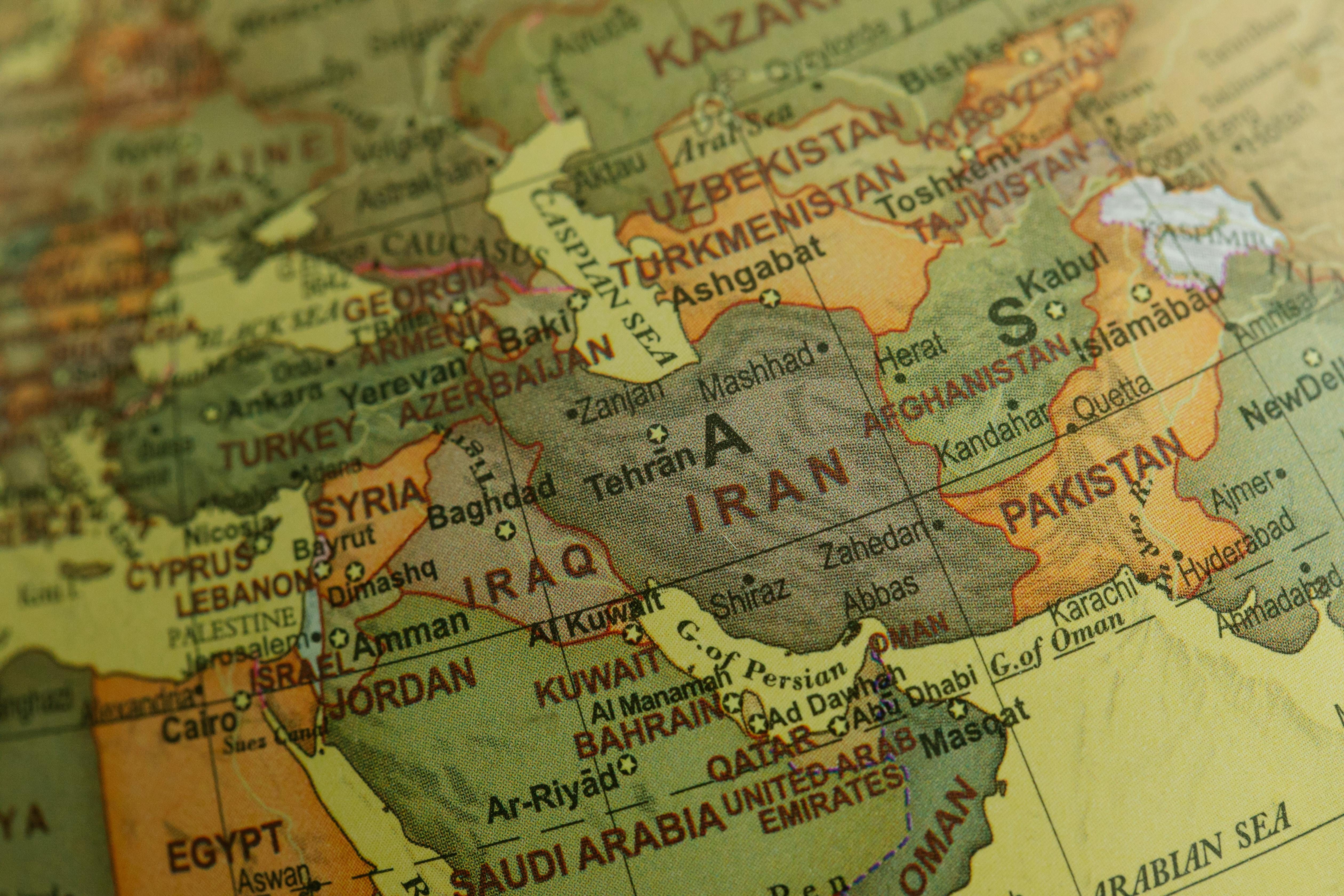
Defence Secretary John Healey announced that the United Kingdom is considering how to defend shipping in the Strait of Hormuz from Iranian attacks:
“However, the options to assist in defending shipping through the Strait of Hormuz or conducting evacuations are more limited than they have been in the past following defence cuts. A decade ago, the Royal Navy had at least one major warship operating out of Bahrain and up to four minehunters - each one a large, crewed ship - as well as a huge support vessel. Today, there are no warships based out of Bahrain, with the last crewed minehunter, HMS Middleton, sent back to the UK for maintenance. It means the UK could only contribute to an effort to protect shipping in the Gulf alongside allies like the US and France.”
On International Women’s Day, Victoria Bateman documented why it’s the collective, not capitalism, that women should fear:
“Male trade unionists realised that they could use their collective power to halve the competition that they faced in the job market if they excluded women from the workforce and so pressured employers, under threat of strike action, to stop employing women. This plan worked: in 1808, the hatters of Stockport won their fight with their employers to exclude women from hat making, as, two years later, did bookbinders. By 1820, cotton spinners in Glasgow and Manchester had followed suit, and in Lancashire, male spinners went even further, using their collective power to insist that their employers didn’t even employ other men unless they were a son, brother or nephew of a current spinner. In London, in 1834, tailors also went on strike to exclude women from their trade. As one exasperated woman exclaimed in The Pioneer: “Surely the men might think of a better method of benefiting themselves than that of driving so many industrious women out of employment. Surely, while they loudly complain of oppression, they will not turn oppressors themselves.” But, rather than admitting that greed and self-interest were at the root of their demands, unions portrayed their actions as both protecting women from workforce exploitation and preventing the neglect of children. Thanks to this supposed male benevolence, women who out of economic necessity continued to work were left with the crumbs while the remainder of their sex assumed the dutiful role of the housewife.”
Freddie Attenborough outlines how Strategic Lawsuits Against Public Participation are stifling academic debate in Britain:
“While such tactics are most commonly associated with attempts to intimidate journalists, academic researchers have increasingly found themselves on the receiving end of similar threats from companies and wealthy individuals unhappy with critical scholarship. For example, in Scotland in 2020, the former academic and then Green MSP Andy Wightman defended himself against a £750,000 defamation action brought by Dr Paul O’Donoghue of Wildcat Haven Enterprises over blogposts questioning a Highlands “souvenir plot” land scheme. Lord Clark in Edinburgh ultimately threw out the claim, ruling that Wightman’s comments were defensible as fair comment on matters of public interest. Those episodes matter, the signatories argue, not only because of the immediate strain imposed on the individuals targeted but because of the wider incentives they create. The threat of costly litigation can, as the letter puts it, “encourage self-censorship, deter scholars from investigating powerful interests, raise the cost of undertaking sensitive research because of the legal advice required, and make it harder for academics to disseminate their findings to the public and policymakers”.”
Adrian Wooldridge ponders the question of how to save liberalism:
“And yet the problem is so much deeper than bad candidates. It’s the problem of a decrepit regime — a collection of functionaries and placeholders, who’ve reaped the benefits of the past 40 years of economic and moral deregulation and are now incapable of running the world which they have made. Like all elites, they developed the habit of backscratching and logrolling. And, like all elites, they soon lost touch with the people beneath them. That explains the striking number of destructive liberal policies, which have wreaked havoc across the West. San Francisco, a bastion of social liberalism, is so addled with homeless encampments on the streets and drug addicts snorting fentanyl in public, that even progressives have had enough. Sweden, once a by-word for social harmony, now suffers from the highest rate of death-by-shooting in Europe, thanks to the proliferation of immigrant gangs. The British northern cities that powered the Industrial Revolution are plagued, in their ethnic enclaves, by cousin-marriage, honor punishments and grooming gangs. The response of all too many liberal intellectuals to these tragedies is to demand more of the policies that led to them in the first place. The triumphalism of the Nineties has been the common man’s loss.”
Lara Brown applauds a rare instance of restraint amid the social media moral panic:
“As a member of the first cohort raised online, I have a lot to say for its benefits. If you liked an obscure band or an unusual hobby, social media would house a chatroom for other fans whom one couldn’t have met in real life. If you had to be home before dark, social media gave you a way to talk to friends over long winter evenings. Of course it came with some downsides, but this has been the case for being a teenager at any point in history. Some children will get bullied on social media. But others will be picked on in person. Some girls may develop body image issues from looking at overly thin photoshopped influencers – but anyone who believes this is a phenomenon unique to the internet has clearly never picked up a copy of the Daily Mail. It is an unavoidable truth that children, particularly girls, seem to be more unhappy. But there are a myriad of reasons for why this is the case. As a starting point: we are far more likely to medicalise children, attach a diagnosis of ‘anxiety’ or ‘depression’ to them at a young age and funnel them into a lifetime of therapy and drugs they may not need. Modern life is designed to do everything possible to prevent children from developing resilience. Are you struggling with exams? Let’s give you extra time. Is that adventure playground too challenging? Let’s regulate it to be safer. Is social media making you sad? Let’s ban it.”
Janan Ganesh argues that Britain’s political right displays vulnerability is its America-worship:
“That Farage could not anticipate this war’s unpopularity suggests again that his US worship clouds his political judgment. Pete Hegseth’s braggadocio, the try-hard code name of Operation Epic Fury: this war is even stylistically unBritish. If it had brought swift and positive regime change at minimal cost, voters might have backed it. Otherwise, it was a vote-loser from the start. Farage now cannot even claim to have supported it out of principle given that he has flipped in less than a fortnight. Kemi Badenoch is also backpedalling, less quickly and deftly. As ever in politics, voters have to decide which is worse: the cynic or the zealot.”
The Times claims that the Government’s Social Cohesion Strategy is a threat to free speech:
“[T]he strategy is less satisfactory in another area, namely on Islamist extremism. Its headline announcement is the creation of an “anti-Muslim hostility tsar” — anti-Muslim hostility being a non-statutory reworking of “Islamophobia”. Steve Reed, the local government secretary, has failed to explain fully why this new role, and the new definition, are necessary given that hatred on grounds of religion and race is already illegal. Although the government has shied away from a legally binding definition, there will be concern that the definition will be used to dampen criticism of Islam. The strategy also places significant focus on social media, with a promise to use the sweeping powers of the Online Safety Act to combat online harms. There is no doubt that social media platforms have become vectors of hate, but the government’s eagerness to deploy the law reveals a worrying desire to curb free speech.”
Our own Callum Price wrote about Dubai Derangement Syndrome afflicting many in Britain:
“Can we not accept that people might seek to use their agency to go and find a better life for themselves and their families, even if it might not be our own version of a better life? When we scratch beneath the surface it appears that many can’t, political elites and otherwise, which is a damning illustration of their attitude to prosperity. It is a sort of Dubai Derangement Syndrome; embracing decline because prosperity is gauche. The belief that having the gall to do something radical to improve your lot in life is an act of vile self-interest, and fundamentally un-British. Taking radical action to achieve something better is beyond the pale. We have it good enough and we should be happy about it.”
Bagehot declares Britain to be a ‘Compo Nation’:
“When voters think no one should ever lose, good government becomes impossible. Tough decisions in the national interest are crowded out by soft ones for a few individuals. Among all the Labour government’s flaws, its inability to say no is its worst. The government cowers at the lightest opposition to its policies, even from people who will never vote for it. Yet picking losers is the most fundamental part of a government’s job, even if, for natural reasons, politicians would rather not. Abdicating this duty will do Labour no favours. Zack Polanski, the Greens’ populist leader, has pledged to wipe out student debt and reimburse the WASPI women. When Mr Polanski speaks, he speaks for the Compo Nation.”
John Bew: Don’t let Britain decline
Joseph Dinnage: Churchills vs Hedgehogs
Emma Revell: The Greens are no tree-hugging hippies, their policies would destroy Britain
BBC News: UK economy flatlines as people cut back on eating out
Financial Times: Shabana Mahmood bans ‘uniquely contentious’ Al Quds Day march
The Independent: Lammy’s jury reforms pass first Commons hurdle despite Labour backbench opposition
Bloomberg: UK Plans to Overhaul Nuclear Regulation to Speed Up Projects
Stacks of Freedom
Highlights from our fellow Substackers
Chris Curtis MP argues Labour need to “focus on winning back the support of economically insecure voters”:

Rebecca Lowe explains her opposition to liberal interventionism:

Alexander Kustov discusses how to change minds on immigration policy:

Neil O’Brien MP investigates how to boost the performance of the Civil Service:

Michael Hill reveals how NIMBY voters can be won round:
Chris Snowdon shows how the vaping ban is a solution looking for a problem:

Wonk World
Ideas and analysis from the think tanks, academia and other clever sorts
The Entrepreneurs Network published research urging regulators to design a light-touch governance regime for stablecoins:
“As stablecoins redefine global finance, the choices made now will determine whether the UK leads or lags. While the FCA and BoE’s intentions to ensure stability and consumer protection are laudable, their proposals in their current form fall short. The UK must avoid repeating the EU’s over-prescriptive MiCA model and instead adopt a pragmatic, principles-based approach similar to the United States’ GENIUS Act. A genuinely pro-innovation regime should embrace the stablecoin business model, ensure commercial viability, and provide entrepreneurs who are currently building in the dark with clear, facilitative guardrails. These guardrails should enable rather than inhibit growth. If designed correctly, such a framework could allow the UK to continue its long-standing leadership in global finance, strengthen sterling’s digital relevance, and attract the next generation of financial innovators.”
Kane Emmerson and James Gradel call on more councils to allow resident-led densification to end the housing shortage:
“London’s housing crisis is pricing out families. The sky-high cost of space means that many Londoners face a tough question: if you want to have children, what do you sacrifice? Do you try to fit your family into a small home, or do you say goodbye to the community you call home? But one interesting housing reform enacted by Haringey Council back in 2010 shows us that there is a third option: allowing homeowners to extend upwards. Since residents in South Tottenham were empowered to add up to 1.5 new storeys above their homes, the take-up has been impressively high, but it makes absolute sense — it’s a living standards improvement for local residents. As of today, almost 60% of eligible homeowners have added new storeys to their properties, meaning the same area can now house over 1,000 more people — children, elderly relatives, lodgers.”
Celebrating 250 years of Adam Smith’s Wealth of Nations: the Institute of Economic Affairs published a new paper on the genius of the economist, and the Adam Smith Institute launched a graphic novel version of the original book.
Hear Hear
Podcasts for weekend listening
Tim Leunig spoke to Marc Sidwell to discuss Britain’s energy predicament:
Posting to Policy
Best of social media this week


Further Afield
Interesting stuff from around the world
Mojtaba Khamenei succeeded his father as Iran’s new Supreme Leader:
“Hard men populate Mojtaba’s inner circle. They include figures such as Hossein Taeb, the feared former head of the Islamic Revolutionary Guard Corps’ intelligence arm; Mohammad Baqer Qalibaf, a former IRGC commander and the current speaker of Parliament; and Hossein Fadaei, the late Ali Khamenei’s primary internal enforcer. These figures have collectively spent more than a century in the service of repression. Their coarsened appearances reflect George Orwell’s observation that by age 50, every man has the face that he deserves. Taeb and the younger Khamenei go back to the 1980s, when Mojtaba served in the Iran-Iraq War and Taeb was his commander. Although the clergy and the IRGC are commonly understood as separate pillars of the Islamic Republic, Taeb, as both a cleric and an IRGC officer, serves as a bridge between the two power centers. One of the most feared and loathed men in Iran, he is thought to have helped engineer Mojtaba’s succession through his influence over the Assembly of Experts, the body of elderly clerics responsible for choosing the supreme leader.”
Following the US Supreme Court’s ruling against his ‘Liberation Day’ tariffs, Donald Trump took steps to eventually restore import taxes:
“The US has launched new investigations into trading partners including the EU, Japan and Korea, as Donald Trump looks to shore up his tariff wall after the Supreme Court struck down many of his previous levies. The US trade representative’s office on Wednesday unveiled an investigation into what it said was “excess capacity and production in manufacturing sectors” in a series of countries. The move is likely to help the Trump administration raise duties back to the level they were at before the US’s top court last month ruled the president could not use emergency powers to impose tariffs.”
CNBC: Trump reiterates threat of a ‘friendly takeover’ of Cuba as fuel crisis deepens
Washington Post: Video shows U.S. Tomahawk striking near Iranian school and IRGC base
The Economist: There are 56 ethnicities in China — and 55 are getting squashed
New York Times: Canada to Expand Military Presence in Arctic, Following Trump Threats
Financial Times: Russia rakes in $150mn a day in extra revenue from surging oil prices
Reuters: Canada, Mexico say trilateral deal is key ahead of talks to review USMCA
Graph of the Week


Via Tom Calver