

#69 What Difference Does It Make?
Plus: Turbocharged tariffs, rough sleeping records, and the need for neoliberalism
Welcome to the 69th instalment of the Liberal Digest. We have a new Prime Minister, and he’s come racing out the blocks with a flurry of announcements aimed at creating ‘breathing space’ in people’s wallets and bank accounts, and signalling intent for what his Government is going to prioritise — the cost of living. It is fair to say that they work more effectively as signals than as actual policies. Cutting VAT on energy bills amounts to an extremely small benefit per family, and one that will likely disappear with rising prices anyway; the bus fare cap reduction may be felt more, but is only reverting to the status quo ante; and the business rates reduction for pubs will be welcomed by the sector, but not by any Chancellor, current or future, who hopes to build a tax system that makes logical sense. All in all, the jury is out on whether Andy Burnham will continue in this vein, or succeed where his predecessors have failed in making the necessary, more structural reforms our country needs.
Did we miss something? Let us know. On X? Give us a follow.
Stop the Press!
Best op eds, interviews, news and analysis of the week in the old-school media
Ben Hopkinson brands Sir Sadiq Khan’s latest London plan as an abject failure that will not address housing shortages:
“One of the major causes of the construction slowdown was Khan’s high affordability requirements. In the 2021 London Plan, housing projects had to provide 35% of homes at subsidised rates or face a gruelling viability assessment process, which included three or more stages of review where any unexpected upside would be captured. Effectively, if the market conditions worsened, the developer was on the hook, but if they improved, the Mayor captured upside. The stringent affordability requirements became such a significant brake on housebuilding that the Housing Secretary, Steve Reed, stepped in last autumn and forced Khan to implement an emergency housing package. This included lowering the requirements temporarily to 20% with the aim of making housebuilding easier. In the new draft London Plan, the rate of 35% returns for Inner London and the dreaded viability reviews remain. The only slight positive is that Outer London, where house prices are lower and viability is more stretched, gets a slight reprieve with targets of 20% and 25% for certain boroughs. Still, this amounts to a step backwards compared to the emergency measures, when clearly the emergency of a lack of homes being built has not subsided.”
Chris Snowdon takes a look at Britain’s new Energy Secretary, Miatta Fahnbulleh:
“As for Net Zero, there can be no doubt that Fahnbulleh is at least as zealous as her old boss, Ed Miliband. In an article written in 2019, in which she claims that British governments on the left and right have ‘spent decades following a neoliberal recipe of tax cuts, reduced social welfare benefits, and deregulation’, she called for Net Zero to be achieved ‘within 10 to 15 years’, which would be ruinously expensive if it were not utterly impossible. She is a staunch supporter of the Green New Deal, which the NEF helped devise back in 2008. She has applauded Extinction Rebellion and used to be the chair of the Croydon Climate Crisis Commission. If she’s using the issue of climate change to climb the greasy pole, she has been playing a very long game. Instead, there is every indication that Fahnbulleh is a true believer, a dyed-in-the-wool climate ideologue with delusional economic beliefs for whom no cost is too great for the prize of decarbonising the United Kingdom. She genuinely believes that energy costs are too high because we are over-reliant on fossil fuels and wants to make a ‘big sprint’ towards a Net Zero electricity grid by 2030.”
Daniel Finkelstein warns that Andy Burnham neglects neoliberal public sector reform at his own risk:
“So when Andy Burnham talks of reversing more than 40 years of neoliberalism and championing a policy of bringing public provision back under state ownership and control, he is not just turning his back on Thatcherism. He is turning his back on a crucial part of his own party’s modern history. Blair did not just adopt this position on public services because he didn’t want to reverse Tory changes. He adopted it because he found the Reinventing Government idea compelling. Osborne and Gaebler weren’t merely politically convenient. They were correct. Until relatively late in their 18 years, the Tories had been quite weak on reform of public services, and Blair thought this was because the right didn’t really believe in such services at all. He wanted to do better because otherwise Labour would fail in its objective of improving public provision. Failure on this front would be problematic for a government of conservatives, but for one of the left it would be a disaster. It would mean Labour asking for more tax money yet not being able to provide better services in return. In other words, Labour didn’t merely surrender to a political consensus established by someone else. It self-confidently shaped that consensus. It recognised that competition, consumer choice and entrepreneurship made private provision better and had the capacity to do that to state provision too.”
Janan Ganesh wonders whether Big Government must be tested to extreme before serious reform can really happen:
“Is it ever OK to hope that one’s prime minister fails? What if that failure would raise the chances of the country finally getting its act together? Even then, a good citizen should feel conflicted. These are haunting times, in part because they force a re-evaluation of what it means to be a patriot. Let us remind ourselves of the stakes. Britain has not balanced its fiscal budget since the millennium. It was still running a deficit on the eve of the banking crash in 2008, after a decade and a half of uninterrupted economic growth. Each region runs a deficit save London and the South East. The welfare state takes up more of national output than it did pre-Thatcher. The UK borrows more expensively than Greece. It has proportionally more social housing than France or Germany. The tax burden is up. According to the “baseline” scenario of the UK fiscal watchdog, public sector net debt will touch 300 per cent of GDP in the 2070s. And still lots of people, including Burnham, believe the problem is something called neoliberalism. This is a difficult view to rebut because it is less an argument than a religious incantation. Fine. All that can be done is to wait until public spending causes a breaking point. So let Andy be Andy: price controls, subsidies, perhaps another stab at “industrial strategy” from a state that could not build a high-speed rail line from Birmingham to Manchester without disgracing itself.”
BBC News: Employer’s national insurance should be cut for all under-25s, MPs say
The Telegraph: Burnham orders halt to early release of prisoners
Financial Times: UK employers should keep access to skilled trades visas, government advisers say
The Spectator: Gary Lineker’s tax hypocrisy
The Times: Andy Burnham ready to scale up oil and gas drilling in North Sea
BBC News: Angela Rayner rules out rent controls in England
Stacks of Freedom
Highlights from our fellow Substackers
James O’Malley reasons why he’s worried Andy Burnham just isn’t serious:

Tim Leunig wants his job to be abolished:

Noah Smith argues the UK should be a warning to the world:

Cass Sunstein discusses lessons to learn from Freidrich Hayek:

Michael Hill probes how Sir Keir Starmer’s glacial approach to planning policy helped lead to his eventual undoing:
Valentin Boboc tots up the staggering cost of nationalisation:

Jeremy Horpdahl maps out how economies can escape their productivity slumps:

Ruxandra Teslo explains why regulation could stymie AI’s promise of abundance:

Wonk World
Ideas and analysis from the think tanks, academia and other clever sorts
Adam Stuart gave a searing response to the Government’s planned cut to business rates for pubs, clubs and live music venues:
“Whatever the government wants to achieve with the business rates system, this complex, ever-changing mishmash of policies cannot be a sensible way to go about it. Business rates have gone from being one of the most stable and simple taxes in the system to one of the least. We seem to be moving ever closer to a system in which the government gives every business a score out of ten each year according to how much it likes the business that year, and sets its tax rate that year accordingly. A coherent view of what business rates are intended to achieve and how they should be designed to achieve that is sorely needed.”
Centre for British Progress are on the hunt for a new Operations Associate:


Hear Hear
Podcasts for weekend listening
Jerusalem Demsas, Matt Ygelsias and Timothy B. Lee trade views on AI’s likely impact on workers:

Robin Hanson explains to Ryan Bourne why we shouldn’t regulate prediction markets to death:
Posting to Policy
Best of social media this week

Via Eamonn Butler
Further Afield
Interesting stuff from around the world
Donald Trump imposed a fresh wave of sweeping tariffs:
“Those targeted, including the UK, China and the European Union, will face a tariff of 10% to 12.5% on all goods, accounting for almost all American imports. The tariffs, which replace an identical levy which expires on Friday, are based on claims key economic partners have failed to properly tackle forced labour. But US trade expert Caroline Freund said the move is “not about forced labour” but that Trump is simply “looking for a legal reason to put the tariffs in”. The US Supreme Court had ruled earlier this year that many of the tariffs imposed globally under emergency powers were illegally enacted. The 10%-12.5% duties on imports were proposed last month by the White House and over concerns they were not doing enough to tackle forced labour. “Today’s action will begin to correct what is both a human rights abuse and distortive trade practice to improve the welfare of workers everywhere,” US Trade Representative Jamieson Greer said. The new duties apply to the top 60 US trade partners covering 99.4% of US imports, it added.”
El País: Marco Rubio says Venezuela’s democratic transition will begin in early August
BBC News: Former Venezuelan President Nicolás Maduro to face trial next June
The Guardian: France becomes first EU country to ban social media access for under-15s
Financial Times: EU fines Google €890mn in test of Donald Trump’s threats to protect Big Tech
The Economist: China’s shadowy maritime militia is worryingly active
Graph of the Week
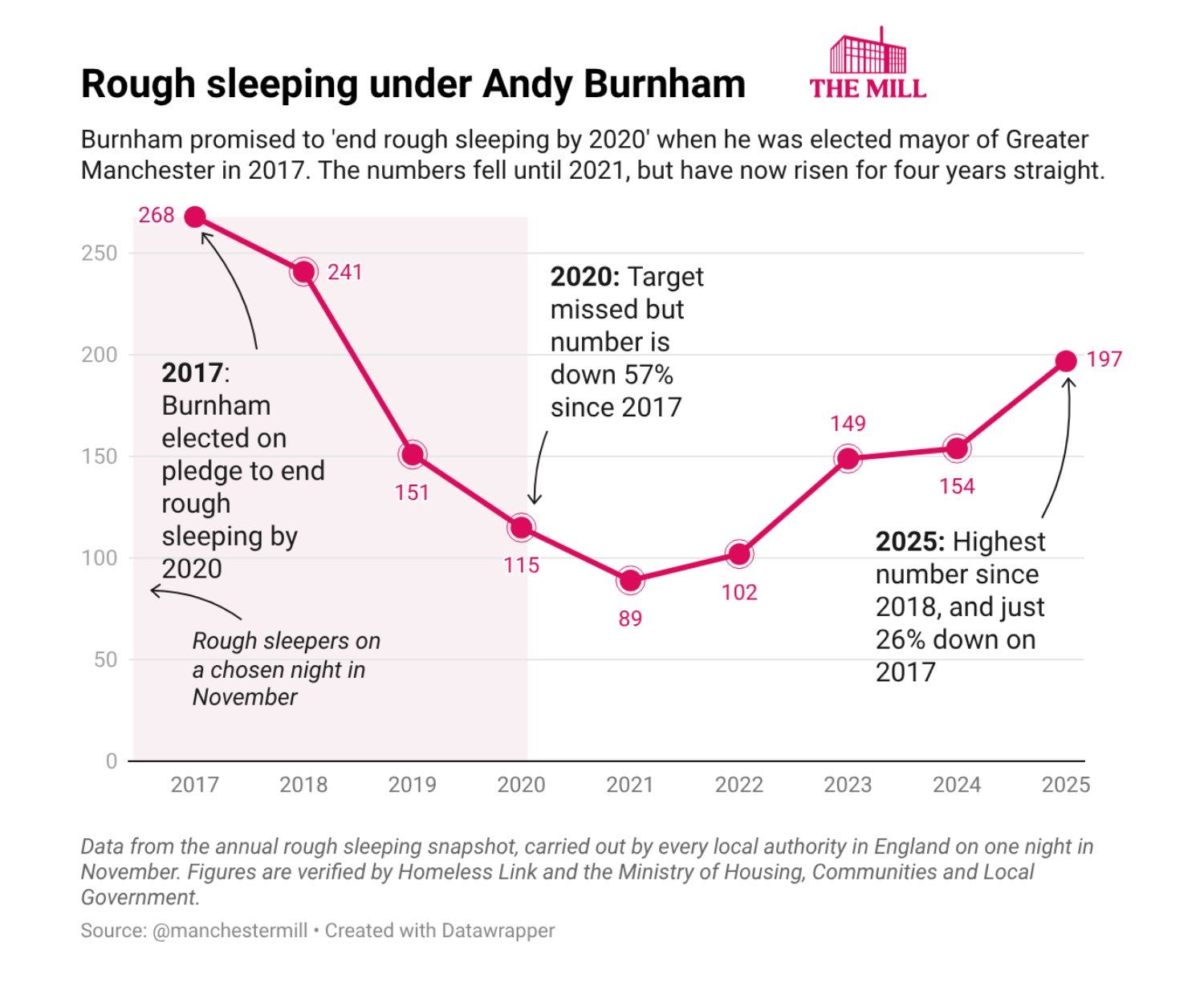
Via The Mill